Catalogue record
- Author
- Charles E. MacKay
- Subject
- WWI Aviation
- Published
- 7 March 2023
- Publisher
- Charles E. MacKay Books
- Pages
- 256
- Format
- Paperback
- Size
- A5, 148 by 210 millimetres
- ISBN
- 9781838056742
Cite this book
MacKay, Charles E. (2023). German Aircraft in the Great War. ISBN 9781838056742. https://charlesmackaybooks.com/books/german-aircraft-great-war
About this book
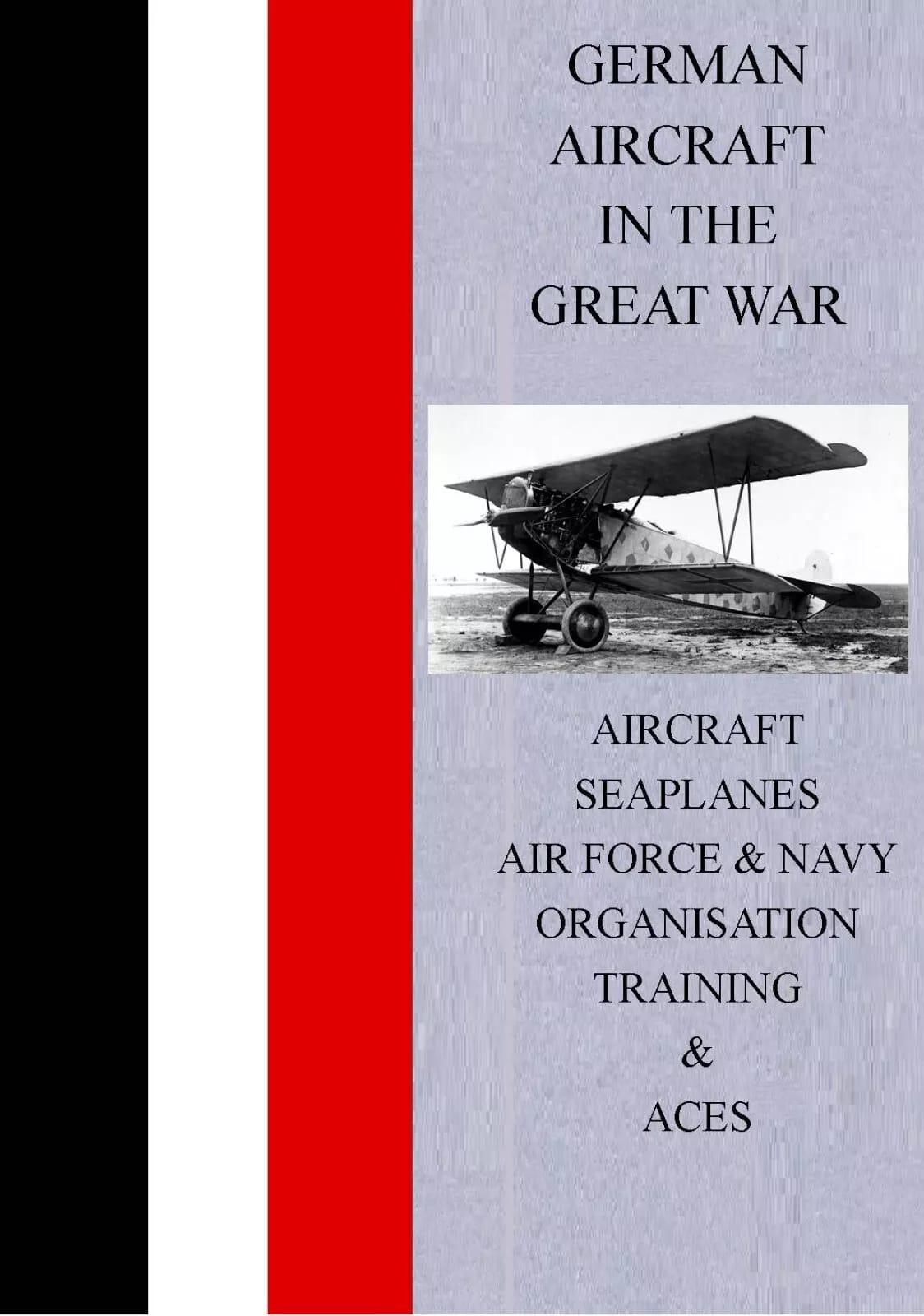
GERMAN AIRCRAFT IN THE GREAT WAR 1914 -1918 ISBN: 9781838056742 A5 256 pages + 200 images.
A comprehensive and original look at the German Air Force and German Naval Air Arm in the First World War 1914-1918. For the first time in print a complete breakdown of the organisation and the German system of supply. Commences with early German aviation to the opening of Johannisthal airfield in 1909 and the growth of Anthony Fokker and his aircraft. For the first time a complete and accurate account of the formation of German aviation and German military aviation which is based on Allied intelligence and newly translated archive documents. The industry reports are based on the inspections of the Inter-Allied Control Commissions on aviation 1919 - 1926.
A. There is special mention of the Fokker D.VII and its fate. Included lists of German aerodromes and the organisation of the German Naval Air Arm in November 1918 (Orders of Battle).
Read the full description
B. For the first time there is a complete description of the German Naval Air Arm
the Marine-Fliegerabteilung in the First World War with orders of battle, including Armistice Day 1918 and the air arm's dominance over the English Channel with the Flanders Flight gaining air superiority. (Included are the giant Riesenflugzeuge aeroplanes and their raids on London.)
C. The aces are not forgotten with an accurate account of the loss of Manfred von Richthofen with his autopsy report, proving Brown did not shoot him down. The other aces Oswald Boelcke and Max Immelmann are described with new information.
D. Also included is Fraulein Mellie Beese, the first German woman pilot who set up a training school at Johannisthal Berlin.
E. There are descriptions of the German aircraft industry, spares supply and the aftermath of the Armistice, and the wartime Amerika Programme and Hindenburg plan. Includes all the aviation firms and their designations.
F. There are orders of battle of the German squadron in the field on the Western Front and the deployment of the German bomber force the Giants - the Riesenflugzeuge. Including Linke Hofmann, Staaken, D.F.W. Zeppelin giant bombers. There is emphasis on the training squadrons and depots.
G. There is fresh information on the all-metal Zeppelin Staaken based on the inspection reports of the Inter-Allied Control Commissions: the inspectors found a second Staaken air liner in production. This too is supported with fresh drawings and pictures. There is a comprehensive appendix.
256 pages over 200 original black and white pictures and drawings.
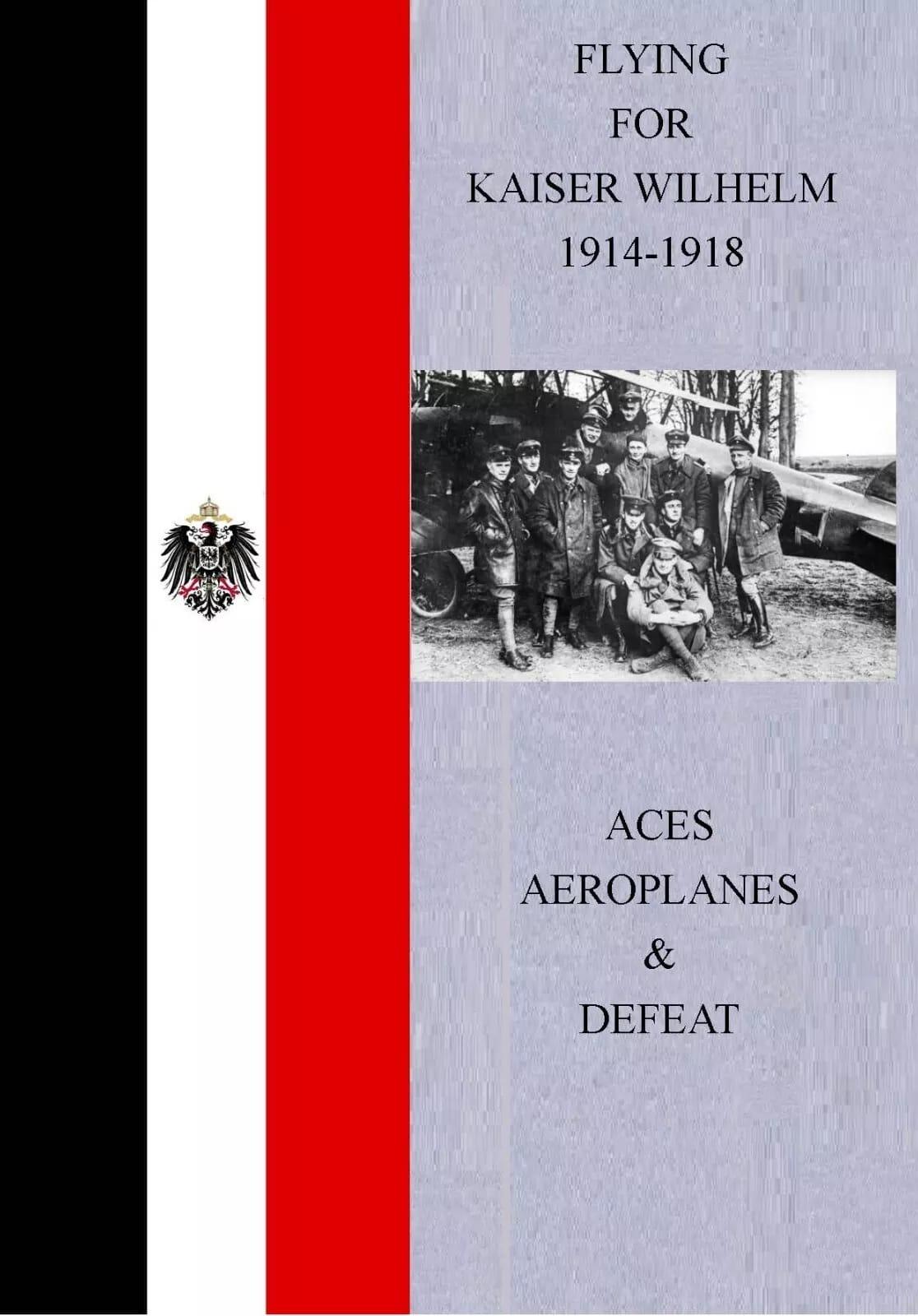
Additional material will be found in Volume 2 "Flying for Kaiser Wilhelm 1914-1918" which is also available from this website.
Frequently asked questions
What does German Aircraft in the Great War cover?
The book covers German military aviation from Johannisthal in 1909 to 1918: the formation of the air service and the Naval Air Arm, aerodromes and orders of battle, the Riesenflugzeuge giant bombers, the aces and the loss of Manfred von Richthofen, training, and the industry as the Inter-Allied Control Commissions found it from 1919 to 1926.
What does the book reveal about Manfred von Richthofen and the German Naval Air Arm?
In 256 A5 pages (ISBN 9781838056742, over 200 photographs and drawings), the book includes Manfred von Richthofen's autopsy report alongside new material on Oswald Boelcke, Max Immelmann, and pioneer woman pilot Melli Beese at Johannisthal, plus complete orders of battle for the Marine-Fliegerabteilung over the English Channel and Flanders.
Which German bomber types and Inter-Allied Control Commission records are covered?
Drawing on Allied intelligence and the Inter-Allied Aeronautical Control Commission inspections after 1919, the study documents the Fokker D.VII, the Amerika Programme and Hindenburg Plan, Riesenflugzeuge giant bombers by Zeppelin-Staaken, Linke-Hofmann and DFW, and a second all-metal Zeppelin-Staaken airliner that Allied inspectors found in production.
In the same series: German Aircraft in the Great War
- Vol.
1German Aircraft in the Great WarThis book£12.89 - Vol.
2Flying for Kaiser Wilhelm 1914-1918: Aces Aeroplanes & Defeat180 pages · 2023£12.89
Published comments on this title
Sources are shown for attribution. These third-party comments are not first-party star ratings. How we choose these comments.
“Great book.”